





India’s digital landscape is undergoing a monumental shift, powered by the rollout of fifth-generation technologies. The arrival of 5G technology in India marks not just an incremental upgrade but a transformative leap, promising to redefine connectivity, fuel innovation, and accelerate economic growth. This new era of ultra-fast, low-latency communication is set to touch every aspect of life, from how we work and learn to how industries operate and cities function. As the nation embraces this powerful new standard, understanding its capabilities, challenges, and immense potential is more important than ever.
This article explores the comprehensive story of 5G in India. We will journey through its development, compare it with previous mobile generations, and uncover the specific applications that will shape our future.
From 1G to 5G: A Journey Through Generations and Technology
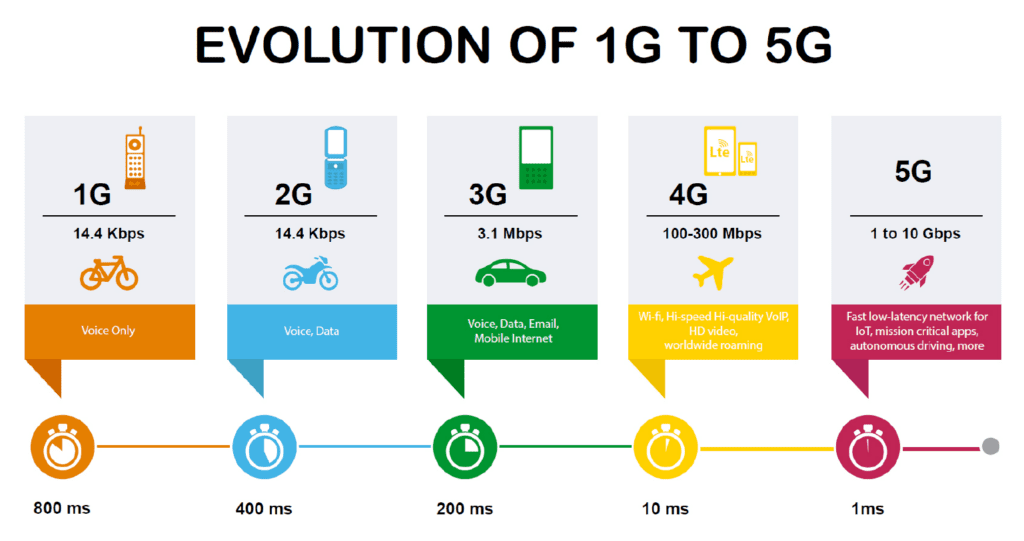
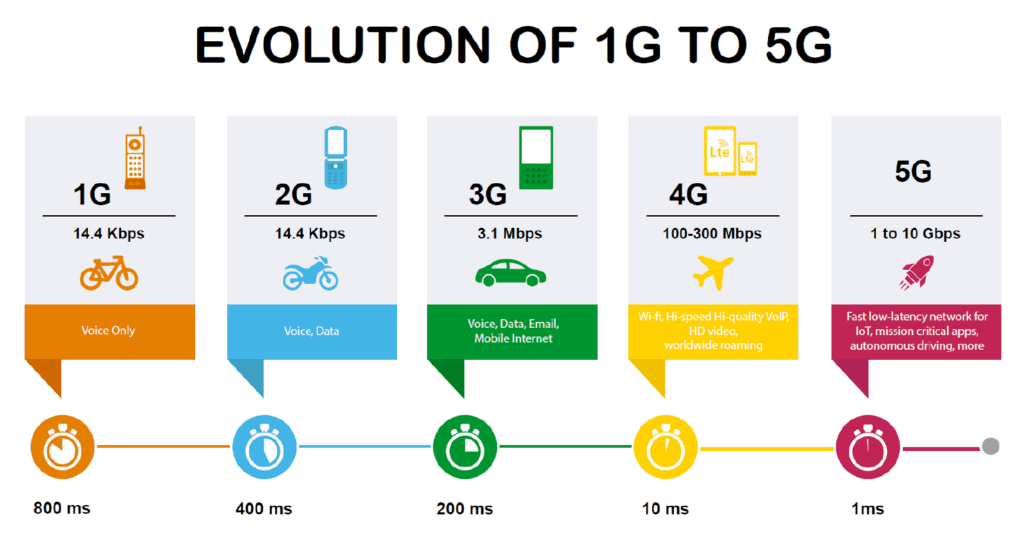
To appreciate the magnitude of the 5G revolution, it’s helpful to look back at the evolution of mobile networks. The comparison of 1G to 5G technologies reveals a remarkable progression in speed, capacity, and functionality.
A Brief History of Mobile Networks
- 1G (First Generation): Introduced in the 1980s, 1G gave us the very first mobile phones. These were analog devices, limited to voice calls only, and were often bulky and expensive.
- 2G (Second Generation): The 1990s brought the shift to digital with 2G. This not only improved voice quality but also introduced data services like SMS (text messages) and MMS (multimedia messages).
- 3G (Third Generation): Arriving in the early 2000s, 3G made the mobile internet a reality. It enabled web browsing, video calling, and app usage on smartphones, fundamentally changing how we access information.
- 4G (Fourth Generation): The current standard for most of the world, 4G LTE (Long-Term Evolution) delivered true mobile broadband. It made high-definition video streaming, seamless online gaming, and high-quality video conferencing commonplace.
The progression from 1G, 2G, 3G, 4G, 5G technology is a story of increasing speed and decreasing latency. Each generation opened up new possibilities, paving the way for the next. Now, 5G is here to build upon that legacy, promising a connected ecosystem far beyond what 4G could ever support.
What Makes 5G Technology a Game-Changer?
5G is not just “faster 4G.” It is built on an entirely new network architecture designed to deliver on three key pillars:
- Enhanced Mobile Broadband (eMBB): This is the aspect most users will notice first. 5G offers peak download speeds that can be up to 100 times faster than 4G. This means downloading a full-length HD movie in seconds, not minutes. Anyone looking for a “PPT on 5G technology free download” or a “5G technology seminar PPT” will experience near-instantaneous access.
- Ultra-Reliable Low-Latency Communication (URLLC): Latency is the delay between sending and receiving a signal. 5G reduces this delay to near-zero (as low as 1 millisecond). This is critical for applications that require real-time responses, such as autonomous vehicles, remote surgery, and advanced industrial automation.
- Massive Machine-Type Communications (mMTC): 5G can connect a massive number of devices simultaneously up to one million per square kilometer. This capability is the backbone of the Internet of Things (IoT), enabling smart cities, smart homes, and connected industries to function on an unprecedented scale.
India’s Homegrown Standard: The Rise of 5Gi Technology
A unique aspect of India’s 5G journey is the development of its own standard, known as 5Gi technology. This standard was developed by a collaboration of academic institutions (like IIT Madras and IIT Hyderabad) and the Centre of Excellence in Wireless Technology (CEWiT).
The primary goal of 5Gi is to improve signal coverage in rural and remote areas, a critical challenge in a country as vast as India. By using a different waveform, 5Gi enhances the reach of mobile signals from the base station, or “world tech tower,” ensuring that even those on the periphery of the network can receive reliable connectivity. While initially a separate standard, 5Gi has since been merged with the global 3GPP 5G standards, ensuring Indian innovations contribute to the worldwide 5G ecosystem.
Powering the 5G Ecosystem: Key Players and Technologies
The rollout of 5G in India involves a complex ecosystem of telecom operators, equipment manufacturers, and technology providers. Major players like Jio, Airtel, and Vodafone Idea are leading the charge in network deployment, while companies like FiberHome Technologies and others provide the crucial underlying infrastructure.
Beyond the network itself, several other technologies are emerging to complement and enhance 5G’s capabilities:
- RedCap Technologies: Short for “Reduced Capability,” RedCap is a new tier of 5G designed for devices that don’t need the full speed and power of broadband 5G. This is perfect for industrial wireless sensors, wearables, and other lower-complexity IoT devices, offering a more efficient and cost-effective connection.
- Communication Technology in IoT: 5G’s mMTC is the key enabler for a massive expansion of the IoT. With support from innovators like Skylo Technologies, which focuses on connecting machines and sensors via satellite, 5G will bridge connectivity gaps for logistics, agriculture, and infrastructure monitoring.
- Li-Fi Technology: While not a direct part of 5G, Li-Fi (Light Fidelity) presents an interesting parallel. As detailed in many a Li-Fi technology PPT, it uses light waves from LED bulbs to transmit data at high speeds. In dense indoor environments like offices or airports, Li-Fi could offload traffic from the cellular network, working in tandem with 5G to provide seamless coverage.
Other technology firms, from established names to emerging startups like Uplus Technology, G Net Technologies, and Spectrum 7 Technologies, are all contributing to the growing application layer that will run on top of India’s new 5G networks.
The Real-World Impact of 5G in India
The true significance of 5G lies in its application. While a “5G technology essay” can detail the technical specifications, the real story is how it will transform industries and daily life.
- Healthcare: 5G will enable remote diagnostics, tele-consultations with specialists in urban centers, and even robotic-assisted surgeries in rural hospitals, drastically improving healthcare access and quality.
- Agriculture: Farmers will be able to use IoT sensors to monitor soil moisture, crop health, and weather conditions in real-time. Drones powered by 5G can conduct precise pesticide spraying, increasing yields and reducing waste.
- Manufacturing: “Smart factories” will use 5G to connect machinery, robots, and supply chain systems. This enables predictive maintenance, enhances automation, and improves overall efficiency.
- Education: High-speed, low-latency 5G will bring immersive learning experiences through augmented reality (AR) and virtual reality (VR) to classrooms across the country, making education more engaging and accessible.
- Smart Cities: 5G is the central nervous system for smart cities. It will connect traffic management systems, smart grids for efficient energy distribution, public safety networks, and automated waste management.
Conclusion of 5G Technology: A Connected and Empowered India
The deployment of 5G technology in India is far more than a simple network upgrade. It represents a foundational shift towards a digitally empowered society and a knowledge-based economy. By providing unprecedented speed, reliability, and connectivity, 5G will unlock innovations that were previously in the realm of science fiction. From bolstering our industrial capabilities with advanced IoT and automation to improving the quality of life for citizens in remote corners of the country through better healthcare and education, its impact will be deep and far-reaching.